Too much at once
When the monsoon floods
The monsoon is the rain a country waits for. Sometimes it brings far too much, far too fast.
Mumbai, 26 July 2005
The India Meteorological Department’s summary of 2005 reports that on 27 July, unprecedented heavy rain of 944 millimetres in 24 hours was recorded at Santacruz, in Mumbai. [IMD] Heavy rain in Maharashtra and neighbouring Karnataka in late July and early August killed at least 1,000 people, about 425 of them in Mumbai. [IMD]
A National Institute of Disaster Management case study says the city of 12 million people came to a complete halt. More than 100,000 homes and businesses and 30,000 vehicles were damaged. [NIDM] The strangest detail is how local it was: the Santacruz observatory at the airport recorded 944 mm in the 24 hours to 08:30 on 27 July, while the Colaba observatory recorded only 74 mm. [NIDM] The study notes that Colaba, at the southern tip of the city, normally gets about 2,050 mm a year, and Santacruz, 27 kilometres to the north, about 2,300 mm. [NIDM]

The photograph above shows the Taj Mahal Palace Hotel in Mumbai, filed as taken after a shower on 28 July 2015.
Pakistan, 2022
From mid-June 2022, NASA’s Earth Observatory reported, Pakistan was drenched by extreme monsoon rains that caused its worst flooding in a decade. [NASA Earth Observatory] Pakistan’s National Disaster Management Authority said the floods affected more than 33 million people and destroyed or damaged more than a million houses. [NASA Earth Observatory] The worst flooding was along the Indus River, and the provinces of Balochistan and Sindh had received five to six times their 30-year average rainfall by then, most of it in the summer monsoon. [NASA Earth Observatory]
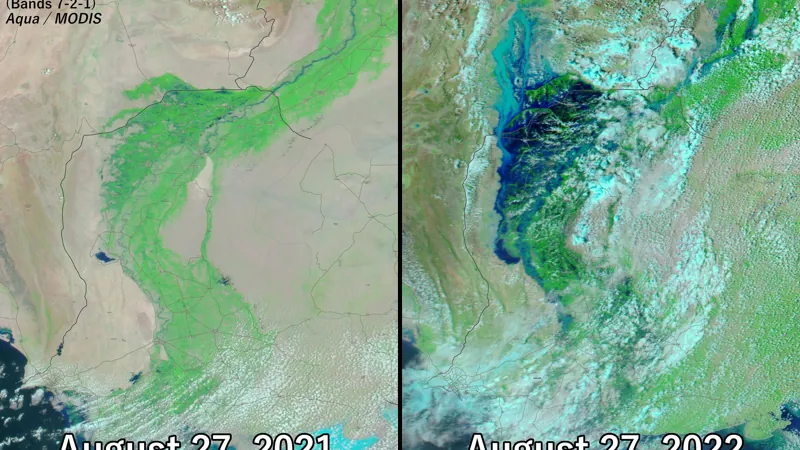
By September, Pakistan’s largest freshwater lake, Lake Manchar, was overflowing. NASA reported several breaches, natural and artificial, the artificial ones made by officials trying to stop the lake flooding densely populated areas catastrophically. The breaches put several hundred villages and more than 100,000 residents in the path of the water. [NASA Earth Observatory]
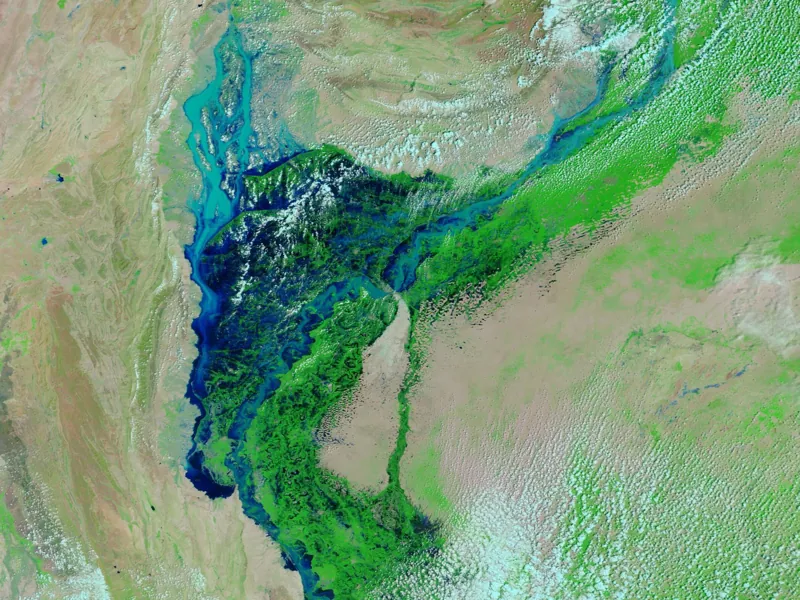
Whose numbers: the 33 million people and a million houses are Pakistan’s National Disaster Management Authority figures, as NASA reported them on 1 September 2022. The satellite picture’s own file caption, from a few days earlier, says about 30 million. Each is given with its date.
Staying safe
In the American Southwest, the National Weather Service issues warnings for severe thunderstorms, flash floods, dust storms and, rarely, tornadoes in the monsoon season, but not for lightning, mainly because almost every thunderstorm, however weak, produces deadly cloud-to-ground lightning. [NWS Tucson] It also notes that monsoon winds can raise dust storms that cut visibility below a quarter of a mile. [NWS Tucson]
Enjoyed this desk of official onset dates, three Kerala tests, and two official Julys?
No pop-ups. No intrusive advertising. Just interesting stuff. A little support helps the next climates.im site get built.