Not just India
Monsoons around the world
The Indian monsoon is the famous one, but it has relatives on four continents. Each country measures its own, and each has its own rules.
Northern Australia: measured at the airport
Australia’s Bureau of Meteorology describes the monsoon as a seasonal wind change that brings widespread, long-lasting rain to the tropics, including northern Australia in the wet season, from November to April. [Bureau of Meteorology] In the build-up, summer heating warms the land faster than the oceans, making low pressure. That helps pull the monsoon trough south over the continent, and dry south-easterly trade winds turn into moist north-westerlies. [Bureau of Meteorology]
The official start is measured in one place. The Bureau records the onset at Darwin Airport, to have a consistent location for the reversal of winds that defines the monsoon; monsoon-like weather can happen elsewhere in northern Australia without meeting the official criteria at Darwin. [Bureau of Meteorology] For the 2025–26 season, the initial onset at Darwin Airport came on Tuesday 23 December 2025. [Bureau of Meteorology] Northern Australia typically gets about three monsoon bursts each wet season, separated by inactive “break” periods. [Bureau of Meteorology]
West Africa and the Sahel
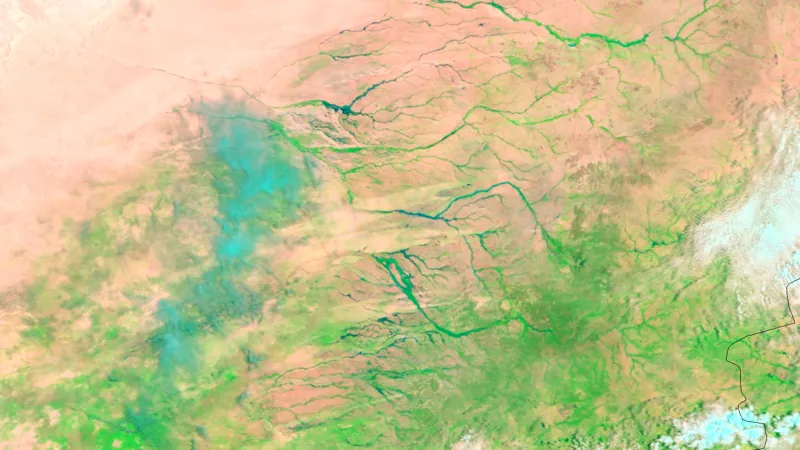
UCAR calls the seasonally wet and dry region just south of the Sahara, in West Africa and the Sahel, another classic monsoon region. [UCAR] The NASA satellite image here, from 17 August 2005, shows its summer rains greening the grassland after a year of poor rain.
Arizona: a monsoon with a fixed season
NOAA says monsoons happen in several parts of the United States too, and the North American Monsoon is a seasonal change in wind as the summer Sun heats the land. [NOAA NESDIS] Arizona State University explains that winds into Arizona mostly come from the west and keep the state dry for much of the year, but into late June and early July they start to come from the south, carrying moisture that triggers summer thunderstorms. [Arizona State University]
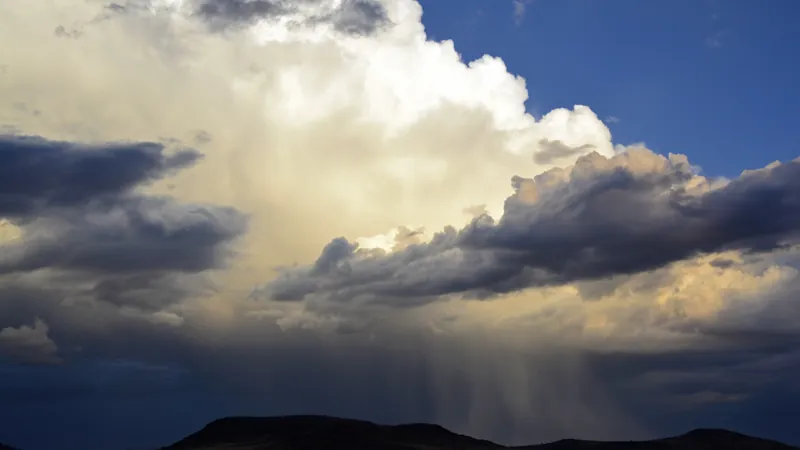
That moisture often arrives from the Gulf of California in “gulf surges”, and can also come from the eastern Pacific, the Gulf of Mexico or the Sierra Madre Occidental forests in Mexico. [Arizona State University]
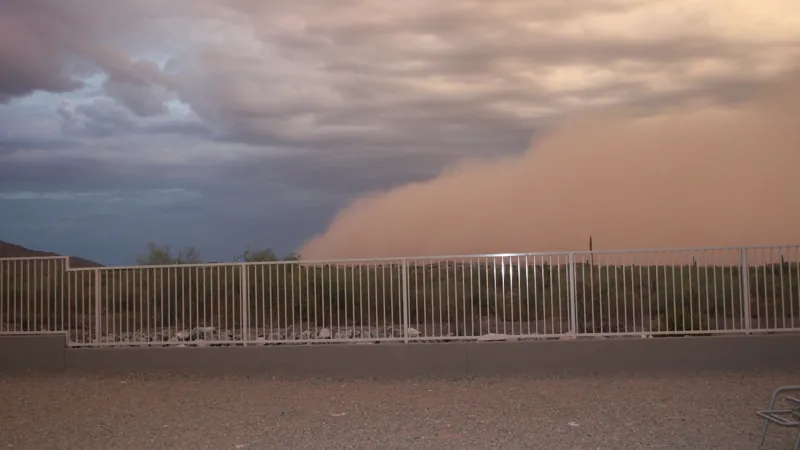
Arizona used to declare its monsoon by humidity. The “legacy” rule for Phoenix was three or more days in a row with dew points averaging 55°F or more. [Arizona State University] Now the south-western National Weather Service offices simply define the monsoon as the period from 15 June to 30 September. [NWS Tucson] They warn that lightning, high winds, dust storms, wildfires, tornadoes, flash floods and extreme heat cause deaths, injuries and tens of millions of dollars of damage each year. [NWS Tucson]
Japan’s baiu, or plum rains
UCAR notes an East Asian monsoon that brings summer rain to China, Japan and Korea, caused by a different kind of wind pattern linked to the jet stream. [UCAR] In Japan it is the baiu. The Japan Meteorological Agency says every area except the northernmost island, Hokkaido, has this rainy season, from early June to late July. [Japan Meteorological Agency] In Okinawa and Amami, in the far south, it starts and ends about a month earlier: Okinawa’s usual dates are around 10 May to around 21 June. [Japan Meteorological Agency] The agency identifies the baiu for 12 areas each year, and tries to pin down a transition of about five days for its start and end, which it admits can be challenging. [Japan Meteorological Agency]

Four rulebooks: India declares onset over Kerala with official tests; Australia uses the wind at Darwin Airport; Arizona uses fixed calendar dates; Japan identifies a five-day transition for each of 12 areas. They are kept apart here, not compared.
Enjoyed this desk of official onset dates, three Kerala tests, and two official Julys?
No pop-ups. No intrusive advertising. Just interesting stuff. A little support helps the next climates.im site get built.